 Handshake Center
Residents
They browse the map, post updates for the right audience, tip authorities in private when needed, list items, confirm deals, join an HOA or barangay, and ask nearby people for help when something feels wrong.
Handshake Center brings neighborhood safety, village coordination, trusted local deals, and verified public service desks onto one map. Residents, HOA and barangay offices, and authorities can act faster while keeping private homes off the public feed and making scams harder to hide behind chat screenshots.
Overview
Handshake Center is a location aware community platform. On Near Me, members can see what is happening within about 5 km, exchange goods and services with clearer deal records, and send sensitive reports to the right desk such as police, barangay, HOA, medical, and other verified public service accounts.
It is not a government agency, taxi company, court, or insurance provider. The product coordinates neighbors and verified desks through visibility controls, identity checks, and reporting tools so the right people see the right signal at the right time.
Everyday use
They browse the map, post updates for the right audience, tip authorities in private when needed, list items, confirm deals, join an HOA or barangay, and ask nearby people for help when something feels wrong.
They verify the desk with government ID, approve members, receive member reports, publish announcements, and can run a digital gate pass when the village supports it.
They open private reports and desk-scoped pins that neighbors cannot see, review nearby map context, and stay discoverable as a verified office on Near Me.
Product surface
Near Me carries sales, hazards, pets, wanted posts, parties, public awareness notices (weather, flood, roads, fire), crash pins, Handshake Pickup for verified public transport drivers, and live map presence tools that require clear consent.
Community tools cover HOA and barangay membership, member only posts, and Good Samaritan signals. Marketplace tools cover listings, proposals, witnessed agreements, business pins, paid boosts, and ownership history. Safety tools cover Danger SOS, verified official desks, authority announcements, and Trusted Live Journey when enabled for paid members. Public awareness pins are not investigation or evidence.
Privacy model
Visibility is a design choice, not an afterthought. The same posting form can warn neighbors, speak only inside a village, or tip authorities without placing a private home on the public map.
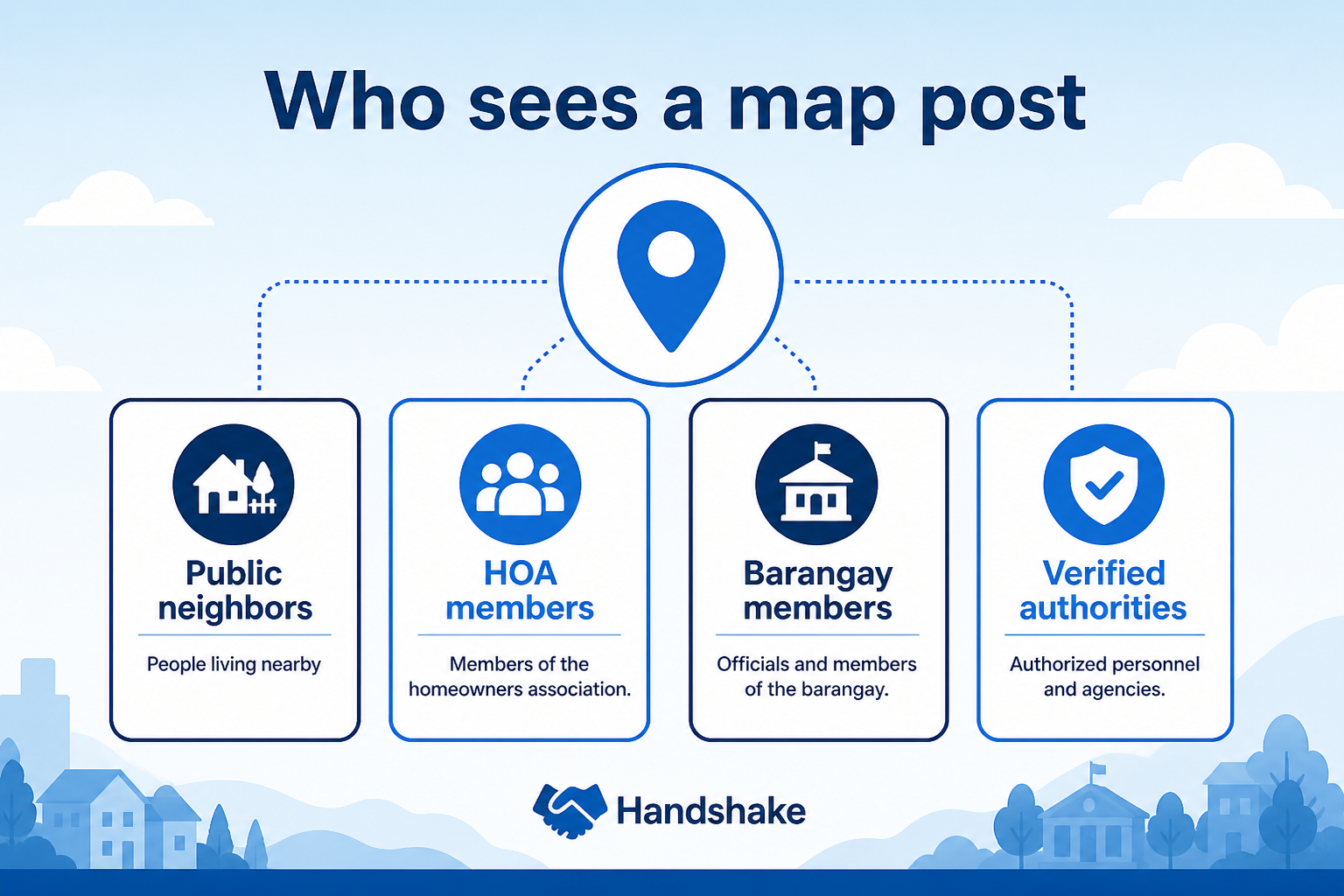
Everyone nearby. Useful for area notices, sales, accidents, ads, and pickup signals.
Active members and that HOA office. Useful for village issues and member posts.
Registered barangay members and that office. Useful for local notices and member posts.
Verified desks only. Best for sensitive private reports without a public exact location.
Legality
Members still follow local law for regulated goods, transport franchises, and emergency response. The app records and routes information. It does not replace local emergency numbers.
Official desks need government or establishment ID and super admin verification before they appear as verified on Near Me. Handshake Pickup is a community match for verified public transport drivers. It is not Grab or TNVS dispatch, not LTO or LTFRB accreditation, and not a fare guarantee.
Public awareness posts should not name private homes or expose people. Locations stay coarse. Private authority channels exist for sensitive cases. Live location sharing and moving ads need explicit consent. Dual sided agreements keep commercial terms clearer than chat only promises. Binding rules live in the Terms, Privacy Policy, and Community Guidelines.
Members
Members get one map for sales, hazards, and village updates nearby. Help can arrive faster from people already on the same street network. When they belong to an HOA or barangay desk, they also get member only spaces. Deals become clearer through proposals, mutual approval, and optional witnesses.
Members keep control. They choose public, community, or authority only visibility. They can keep sensitive tips off the neighbor map, report abuse or fake desks, and unlock a wider paid radius when they need to see farther.
Authorities
Private tips and scoped community pins reduce public panic while still reaching the desk that can act. ID reviewed desks build more trust than anonymous “official” social media pages. Offices get membership queues, announcements, report exports, HOA gate pass tools, and map linked context. Timestamps, pins, and notification trails help reconstruct what residents reported and when.
Leverage
Neighbors share awareness for floods, fire, road issues, and village amenity updates. Membership rules keep internal matters inside the HOA or barangay when that is the right audience.
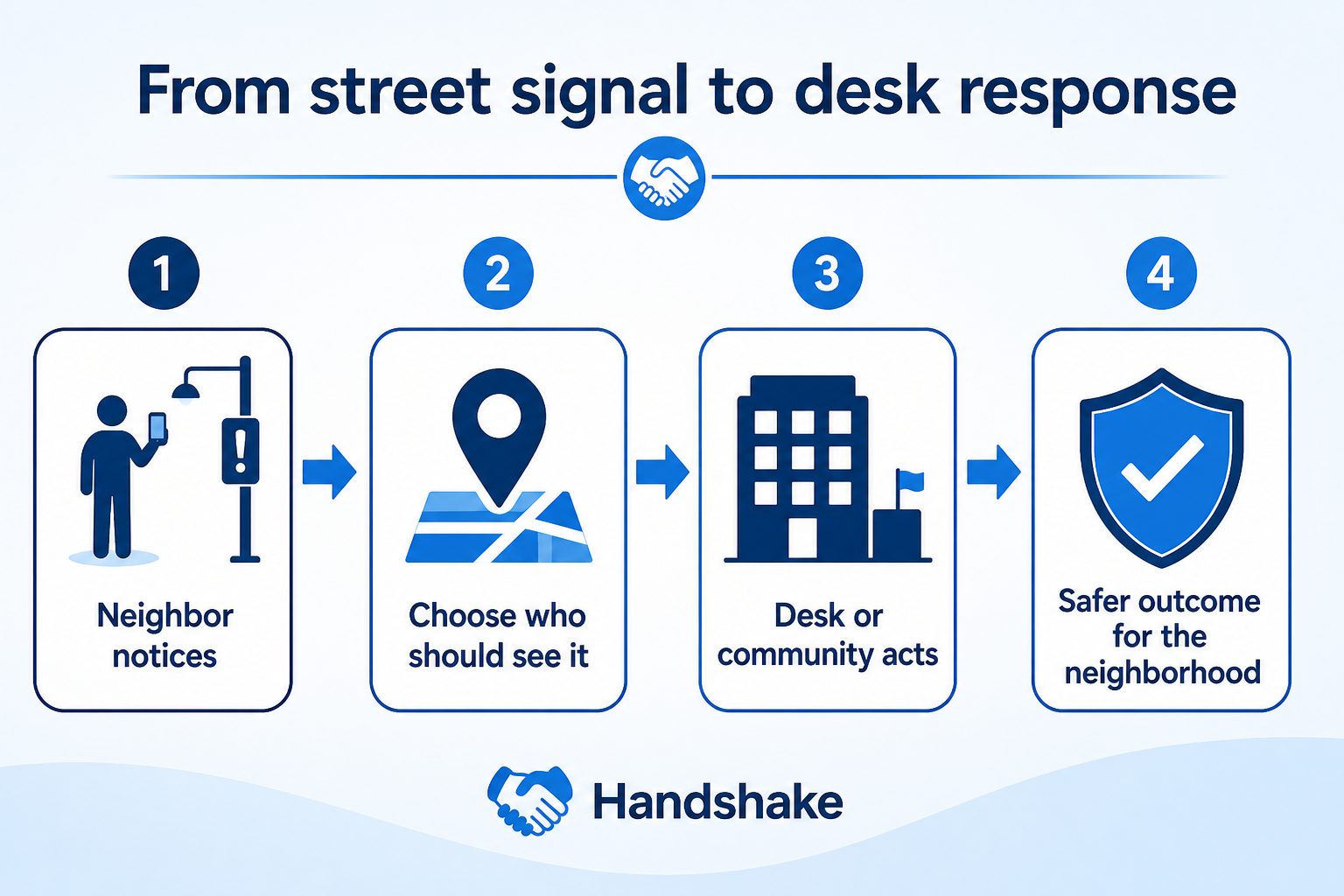
Verified desks, private reports, and report thresholds on fake official accounts create a path from street observation to desk response without broadcasting exact home identity. Public awareness stays available when useful. Confidential channels stay available when required. Neighbors can mark awareness pins Still happening or Cleared, and help as Good Samaritans — without investigation or evidence framing on the public map.
Safety outcomes
Crash and hazard pins warn drivers and walkers before they reach a scene. Danger SOS and nearby alerts can notify people who can intervene while callers still dial emergency services. Authority only channels let people report privately without putting a home address on the public map. Public landmarks, messages before meetups, and Trusted Live Journey reduce blind meetups. HOA gate pass and member posts keep strangers and internal incidents in the right channel.
Commerce
Listings and business pins appear where neighbors already look for safety and community updates. That means high local intent and less wasted attention. Paid map ads and informational boosts help shops and services get noticed farther or longer, including moving billboards that follow a consented device route.
Dual confirmation, witness invites, and a recorded negotiation thread reduce disputes that used to live only in private chat. Wanted posts help demand find nearby supply. Asset and animal records support ownership clarity over time.
Agreements
Handshake Center’s agreement flow exists so neighbors do not have to trust private chat screenshots alone. Both parties negotiate inside the app, invite witnesses to protect their interests, approve or reject terms, and close the deal as successful or not successful. Witnesses can follow the same recorded conversation trail.
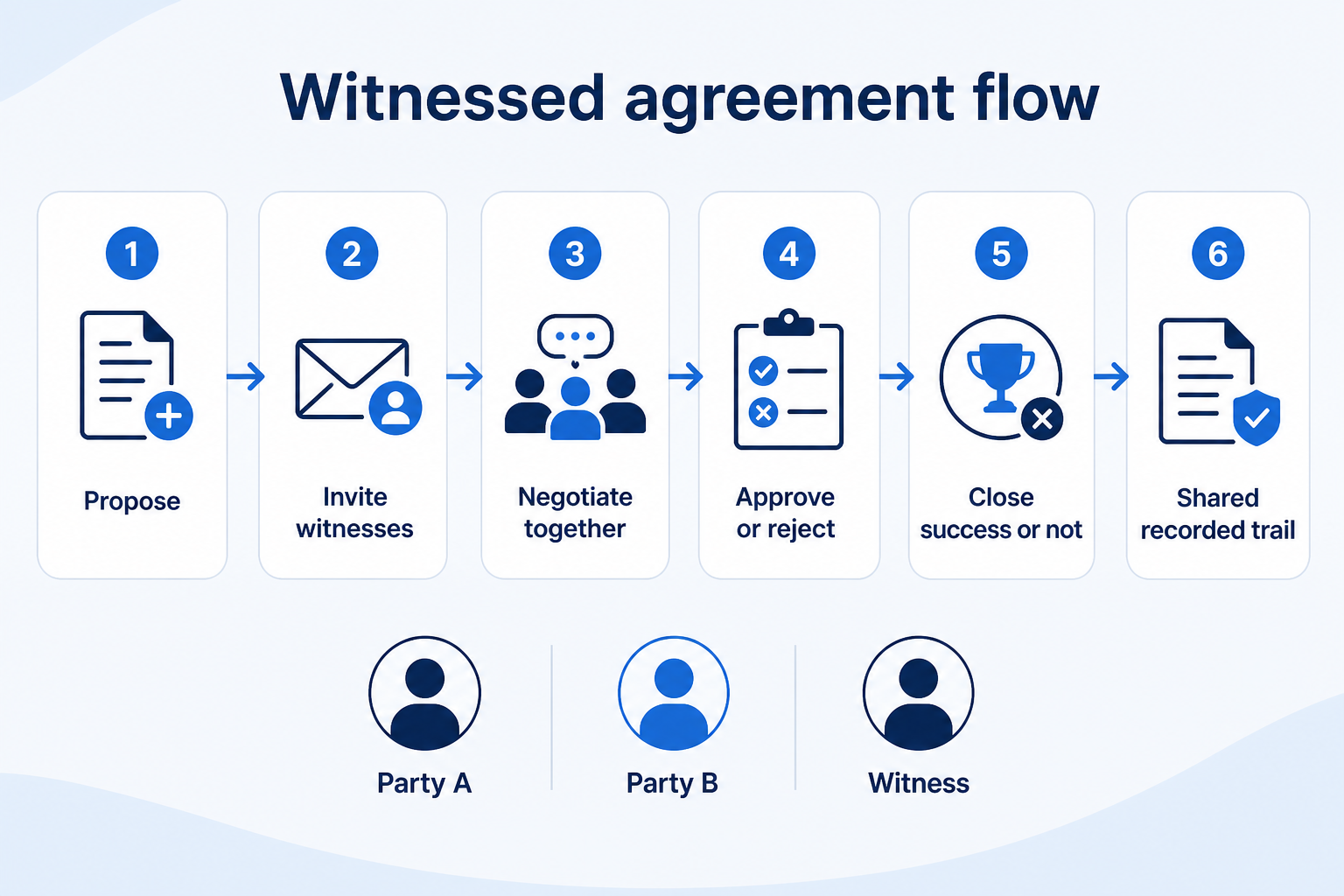
How the parties work. A deal starts as a proposal or agreement between two sides. They negotiate in a shared thread, so both see the same messages. Each party can approve or disapprove negotiation steps. When terms look acceptable, both sides close the agreement as successful. If the deal fails, they can close it as not successful. Key outcomes need party action. One side cannot quietly rewrite history.
How witnesses protect interests. Either party can invite witnesses. Witnesses help validate that the negotiation stayed fair and clear. The conversation is tracked so witnesses can review the record. That reduces room for bait and switch, fake “already paid” claims, or rewritten terms after the fact. Witness feedback stays attached to the deal context in the app.
Protection
Before trust is granted, registration can include ID and selfie checks where enabled. Official desks need ID and super admin verification. Community reports can suspend fake official accounts.
During and after activity, witnessed agreements keep mutual approval and a recorded negotiation trail. Members can report listings, ads, and abusive behavior. Private authority channels avoid public doxxing. Stolen and lost asset workflows point toward authorities. The stance is prevention plus containment: harder impersonation, safer private reporting channels, mutual deal filtering, and a clear path to real desks instead of anonymous comment threads. The public map stays awareness-only — not investigation.
For presenters
Open with one neighborhood story rather than a feature list. Show the visibility audiences early so stakeholders see intentional privacy design. Use a three actor slide for resident, village office, and police or civic desk. Keep a live demo short: open the map demo, post an area notice, switch to HOA only, then open Notifications and Show on map.
Keep the legal slide blunt. This is not a government system, not emergency dispatch, and verification is not a transport franchise. Still call local emergency numbers. For anti scam, walk the agreement diagram: propose, invite witnesses, negotiate, approve or reject, then close as success or not with a recorded trail. Close with partnership asks for barangay or HOA pilots, police desk onboarding, driver verification for Handshake Pickup, and local business boosts.